Research peptides, documented to the lot.
SS-31 and four of the most studied research peptides, supplied as lyophilized powder with HPLC and mass spectrometry verification.
Five research peptides.
One standard.
A short catalogue on purpose. Each compound has its own page with identity data, published research context, storage guidance and current vial sizes.
- SS-31 Mitochondria-targeted tetrapeptide Mol. weight639.8 g/mol From$39
- BPC-157 Synthetic gastric pentadecapeptide Mol. weight1419.5 g/mol From$39
- GHK-Cu Copper-binding tripeptide complex Mol. weight340.4 g/mol (free peptide) From$45
- Retatrutide GIP, GLP-1 and glucagon receptor agonist Mol. weight4731.3 g/mol From$89
- TB-500 Actin-binding peptide Mol. weight4963.4 g/mol From$45
Where this shop started
D-Arg-Dmt-Lys-Phe-NH2
SS-31 is four residues long and one of the most closely studied mitochondria-targeted peptides.
Also known as elamipretide, it associates with cardiolipin on the inner mitochondrial membrane. We stock it in more grades and sizes than any other compound we carry.
- Purity grades
- 4
- Vial options
- 15
- Size range
- 5 mg to 500 mg
What comes with every vial
A peptide is only as useful as the paperwork that proves what it is.
- HPLC purity analysis
- Each lot is analysed by high-performance liquid chromatography, and the result is stated on its certificate.
- Mass spectrometry identity
- Molecular mass is confirmed against the expected value for the sequence, so identity is checked as well as purity.
- Certificate of Analysis
- A COA accompanies each order, with third-party lot testing available on request.
- Batch traceability
- Vials carry a lot reference that ties back to the analytical record for that batch.
- Lyophilized and sealed
- Peptides ship as freeze-dried powder in sealed research vials. Store at -20°C for long-term stability.
Everything in this catalogue is sold for laboratory and in-vitro research.
Products are not for human or animal consumption and are not intended to diagnose, treat, cure or prevent any disease. We sell to qualified researchers, laboratories and institutions who accept this condition of sale.
SS-31 peptide and research peptides for sale
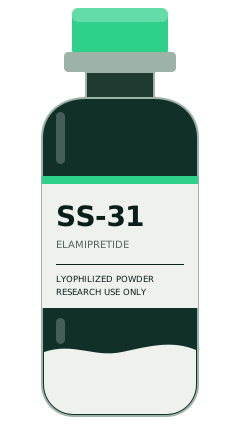
SS-31 peptide is the centre of this shop: a mitochondria-targeted tetrapeptide, also called elamipretide, that we supply as lyophilized powder for laboratory research. Alongside it we carry four more research peptides that appear consistently in current published studies.
SS-31 peptide in four purity grades
Most suppliers list a single version of each compound. We stock SS-31 peptide in Standard, High Purity, Ultra-Pure Research and Bulk grades, in vial sizes from 5 mg to 500 mg. That range lets a laboratory match the grade to the work, from early screening through to studies that need the highest documented purity.
SS-31 has the sequence D-Arg-Dmt-Lys-Phe-NH2 and is studied for its interaction with cardiolipin on the inner mitochondrial membrane. Background reading is available in the elamipretide reference article.
Four more research peptides
- BPC-157 peptide: a stable 15 amino acid peptide studied in tissue repair models.
- GHK-Cu peptide: the copper tripeptide studied in skin and matrix biology.
- Retatrutide peptide: a triple agonist at the GIP, GLP-1 and glucagon receptors.
- TB-500 peptide: synthetic thymosin beta-4, studied in cell migration and repair.
How our research peptides are tested
Every lot is analysed for purity by high-performance liquid chromatography and for identity by mass spectrometry. The results are recorded on a Certificate of Analysis that accompanies the order, and each vial carries a lot reference that ties back to that record. Peptides ship as freeze-dried powder in sealed vials and should be stored at -20°C.
Wholesale SS-31 peptide and bulk orders
Wholesale orders for SS-31 peptide and the rest of the catalogue start at a minimum of 50 units, with no upper limit. Send the peptide, size, quantity and delivery address through the contact page and we will confirm the total by email. We accept Apple Pay, Zelle, Chime, Cash App, USDT and Bitcoin.
All products are sold for laboratory and in-vitro research use only. They are not for human or animal consumption.
Choosing a grade of SS-31 peptide
The four grades differ in documented purity and in pack size. Standard grade suits method development and early screening. High Purity grade is the usual choice for routine cell work. Ultra-Pure Research grade is our highest documented purity tier, intended for studies that need maximum analytical confidence in the sample. Bulk grade covers 100 mg, 250 mg and 500 mg vials for laboratories and resellers that use larger volumes.
Why research peptides ship as lyophilized powder
Peptides are far more stable dry than in solution. Freeze-drying removes water without heat, which protects the material in transit and in storage. Keep unopened vials at -20°C, protected from light and moisture, and reconstitute only what you need shortly before use. Once in solution, store at 2 to 8°C and avoid repeated freeze and thaw cycles.
Ordering research peptides from SS31 Peptide
Choose a compound from the catalogue above, open its page and press Order beside the size you want. The enquiry form opens with that item filled in. Add the number of units and your delivery address, pick a payment method and send. We reply by email with the total and the payment details, and your order ships with its Certificate of Analysis.
Research peptide questions
What is SS-31 peptide?
SS-31, also called elamipretide or MTP-131, is a synthetic mitochondria-targeted tetrapeptide with the sequence D-Arg-Dmt-Lys-Phe-NH2. It is studied for its interaction with cardiolipin on the inner mitochondrial membrane.
Which research peptides do you sell?
We supply SS-31 (elamipretide), BPC-157, GHK-Cu, Retatrutide and TB-500 as lyophilized powder in sealed research vials.
Do you offer wholesale or bulk peptide orders?
Yes. Wholesale orders start at a minimum of 50 units, and larger quantities can be requested through the contact page. SS-31 is also available in bulk vial sizes up to 500 mg.
How are your peptides tested?
Each lot is analysed for purity by HPLC and for identity by mass spectrometry. A Certificate of Analysis accompanies each order.
How do I order and which payment methods do you accept?
Send an enquiry through the contact page with the peptide, quantity and delivery address. We accept Apple Pay, Zelle, Chime, Cash App, USDT and Bitcoin.
Are these peptides for human use?
No. All products are sold for laboratory and in-vitro research use only. They are not for human or animal consumption and are not intended to diagnose, treat, cure or prevent any disease.